By: Wendy Morris
When God Turns Pain Into Purpose
I never imagined that I would one day put some of the most painful parts of my life into a book.
For years, those experiences remained tucked away in my heart, written between the pages of journals, and spoken only in quiet conversations with God. There were parts of my story that very few people knew. I had survived them, but sharing them was something entirely different.
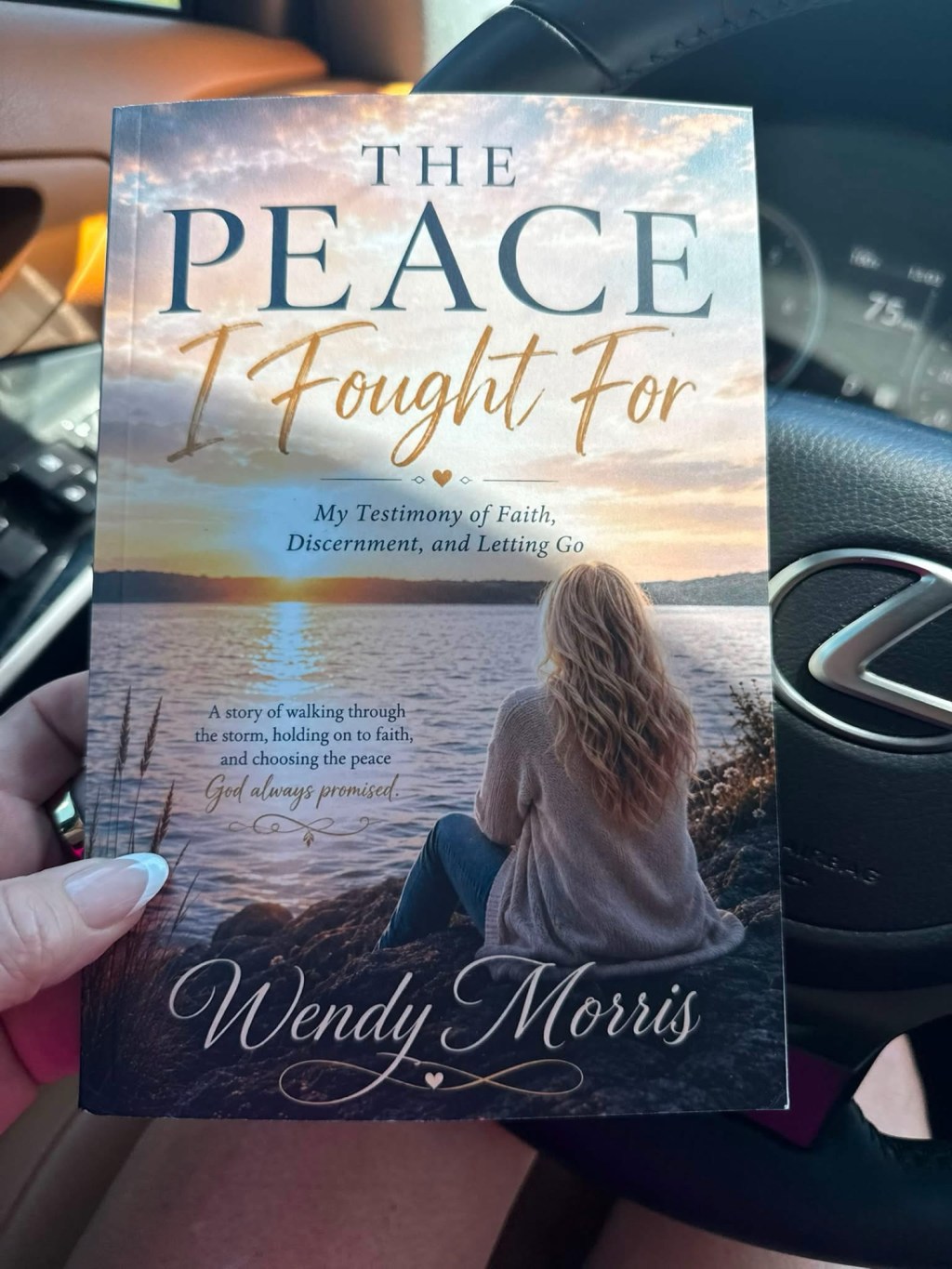
Writing The Peace I Fought For: My Testimony of Faith, Discernment, and Letting Go required me to revisit seasons I thought I had already put behind me. It meant remembering the heartbreak, confusion, betrayal, fear, and grief. But it also gave me the opportunity to look back and recognize something even greater: God had been with me through every single moment.
What once felt like something I needed to hide eventually became a testimony I felt called to share.
I had actually started writing a book several times before, but each attempt seemed to lead me back toward resentment, bitterness, and unforgiveness. The words may have told what happened, but my heart was not yet ready to tell the story in the way God intended. There were still places inside me that needed His healing.
Then something changed.
When I finally sat down to write this book, I realized those feelings no longer had the hold on me that they once did. I was not writing from bitterness or from a desire to make anyone understand what I had endured. I was able to look back with different eyes and recognize how completely God had changed me—my heart, my soul, my whole outlook on life, and even my understanding of what truly matters.
That was when I knew I was ready. The facts of my story had not changed, but the heart telling it had.
Obedience Often Begins With Fear
I wish I could say that I wrote this book without hesitation, but that would not be true. I was afraid.
I wondered what people would think. I questioned whether I was sharing too much. I worried about being misunderstood, and I felt vulnerable knowing that people would be reading about experiences that had once brought me so much pain.
But God kept placing the story on my heart.
I have learned that obedience does not always feel comfortable. Sometimes God asks us to step forward while our hands are still trembling. Courage is not the absence of fear; sometimes courage is simply choosing to obey God even while fear is present.
> “For God hath not given us the spirit of fear; but of power, and of love, and of a sound mind.” — 2 Timothy 1:7 (KJV)
Every time I have faced fear and remained obedient to God, something has changed inside me. There is freedom on the other side of obedience. There is confidence—not confidence in my own ability, but confidence that God will meet me wherever He leads me.
Submitting this book for publication was one of those moments.
This Is Not a Story About Having It All Figured Out
I did not write this book because I have everything figured out. I did not write it because healing made my life perfect or erased every difficult memory.
I wrote it because I am not the woman I once was.
God has changed me spiritually, mentally, and physically. He has taught me about discernment, boundaries, forgiveness, obedience, and the difficult but necessary work of letting go. He showed me that forgiveness does not require returning to what harmed me. He taught me that protecting my peace is not selfish and that being equally yoked is not merely a suggestion—it matters.
Most importantly, He taught me that peace does not come from controlling the outcome. True peace comes from trusting Him with it.
> “Trust in the Lord with all thine heart; and lean not unto thine own understanding. In all thy ways acknowledge him, and he shall direct thy paths.” — Proverbs 3:5–6 (KJV)
There were times when I could not understand what God was doing. Looking back, I can see that He was rebuilding me even when I thought I was simply trying to survive.
God Did Not Waste My Pain
Pain can make us feel as though part of our life has been stolen. We may look back at the years and wonder what could have been different. But I now believe that when we place our broken pieces in God’s hands, He does not waste any of them.
He can use our pain to deepen our compassion. He can use our disappointments to sharpen our discernment. He can use what nearly broke us to help someone else believe that they can make it too.
That does not mean the pain was good. It means God is good enough to redeem it.
> “He healeth the broken in heart, and bindeth up their wounds.” — Psalm 147:3 (KJV)
My story is not only about what happened to me. It is about what God did within me. It is a story of learning to release what I could not change, surrender what I could not carry, and trust God with the life still ahead of me.
Why I Chose to Share It
I shared my testimony because I know there is another woman somewhere wondering whether she will ever feel whole again.
She may be living with heartbreak, betrayal, or the effects of addiction within her family. She may be questioning her worth, struggling to establish boundaries, or holding onto something God has been asking her to release. She may appear strong to everyone around her while privately asking God how much longer she can keep going.
I want her to know that this season is not the end of her story.
Healing may not happen overnight. It can be slow, painful, and deeply personal. But God is present in the process. He is able to bring beauty from ashes, purpose from pain, and peace from places that once held only confusion.
If even one person reads my story and realizes that she is not alone, then every vulnerable moment involved in writing it was worth it.
A New Beginning
Seeing my book published felt like more than completing a project. It felt like a new beginning.
For so long, I wondered whether this day would ever come. I wanted it, but I was scared. Yet God has a way of bringing us out of our comfort zones and reminding us that His plans are bigger than our fear.
I could never have done this without Him.
The Peace I Fought For is now available in Kindle and paperback formats on Amazon. If you are walking through a difficult season—or if you love someone who is—I pray this book reminds you that God is still working, even when you cannot yet see how the story will end.
This is my testimony of faith, discernment, healing, and letting go.
But above everything else, it is a testimony of a faithful God.
Purchase The Peace I Fought For on Amazon
Reflection Questions
1. Is there a painful part of your story that God may be redeeming?
2. Has fear been keeping you from something God has placed on your heart?
3. What are you trying to control that you need to surrender to Him?
4. How has God used a difficult season to change or strengthen you?
Closing Prayer
Heavenly Father,
Thank You for never wasting our pain. Thank You for staying close to us during the seasons when we feel broken, afraid, or uncertain. Give us the courage to obey You even when the next step feels uncomfortable. Help us release what we cannot control and trust You with every unfinished part of our story.
Use our experiences for Your glory. Bring healing where there is hurt, wisdom where there is confusion, and peace where there has been fear. Remind the person reading this that she is not alone, her life still has purpose, and You are not finished with her yet.
In Jesus’ name, amen.
—Wendy